
Sri Lankan Potato Curry
Sri Lankan Potato Curry or Ala Curry is a rice and curry staple. Potatoes cooked in a creamy coconut base and mildly spiced, it’s simple and so good. Tempering is optional, but it adds an extra layer of flavor. Let me show you how to make this.
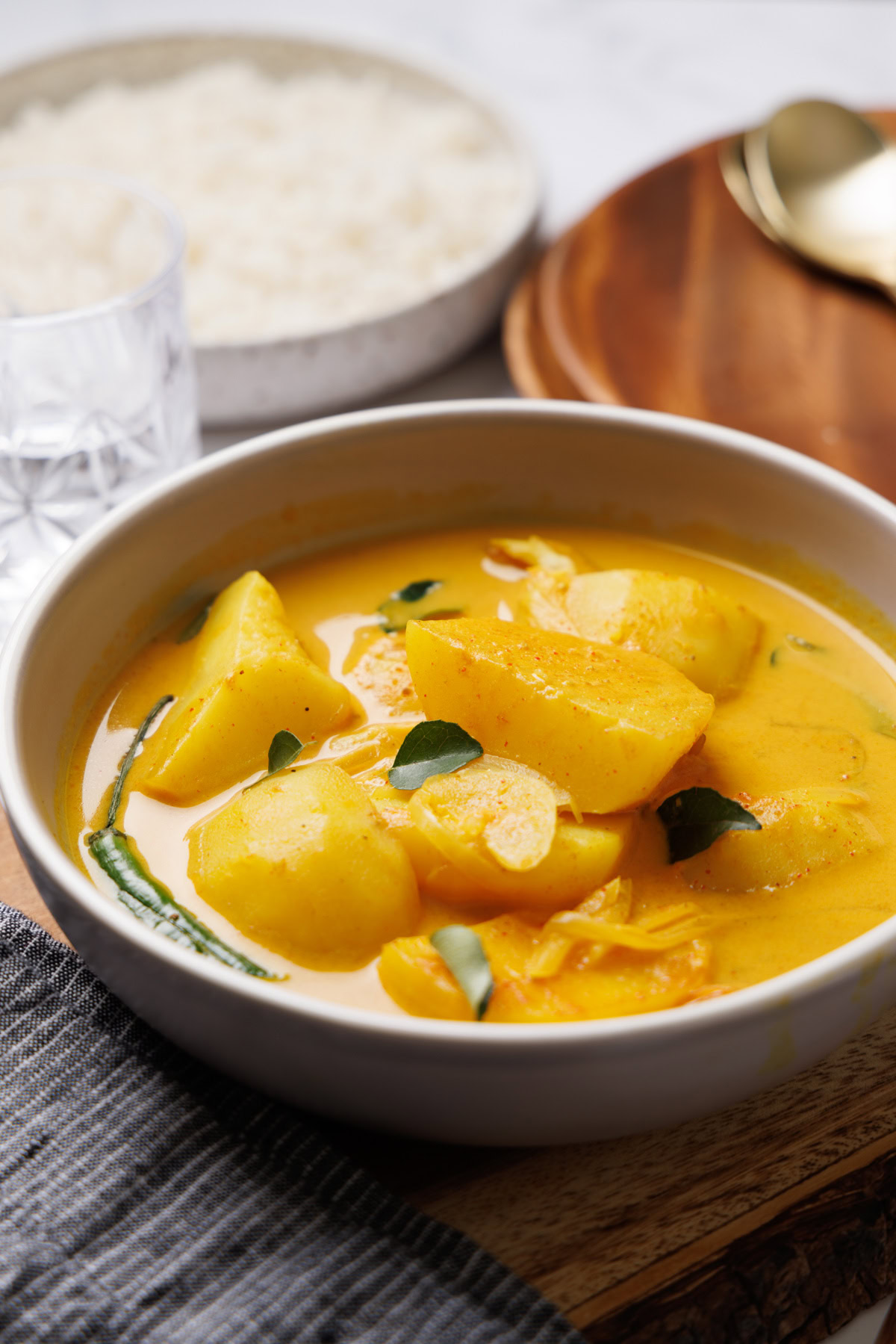
I’ve been making this potato curry my whole life – it’s one of the first curries I learned to cook, and one I still make for my family now.
When it comes to Sri Lankan cooking, I just eyeball the ingredients. There’s no set rule here, especially with the spices and coconut milk. The measurements I’ve given you are a guide – adjust to your taste and you really can’t go wrong.
If you’re new to Sri Lankan cooking or just trying to nail a reliable ala curry that tastes like something your Lankan aunty would make, this is the one.
What Is Sri Lankan Potato Curry?
This is a classic Sri Lankan “white curry” like the red lentil dal(parippu). The potatoes are cooked slowly in thin coconut milk with aromatics like curry leaves, rampe, fenugreek, and a little garlic. Then finished with thick coconut milk that makes the whole thing incredibly creamy.
It’s a staple of the rice and curry spread, but honestly, it goes just as well with idiyappa, crusty bread, or even roti.
This is mild enough for kids, add extra chilli powder for a bit more heat. Tempering is optional for everyday cooking, but if you’re making this for a special occasion or want that extra layer of flavour, don’t skip it.
Ingredient Notes
Here’s what you’ll need. No quantities in this section. Check the recipe card below for exact amounts.
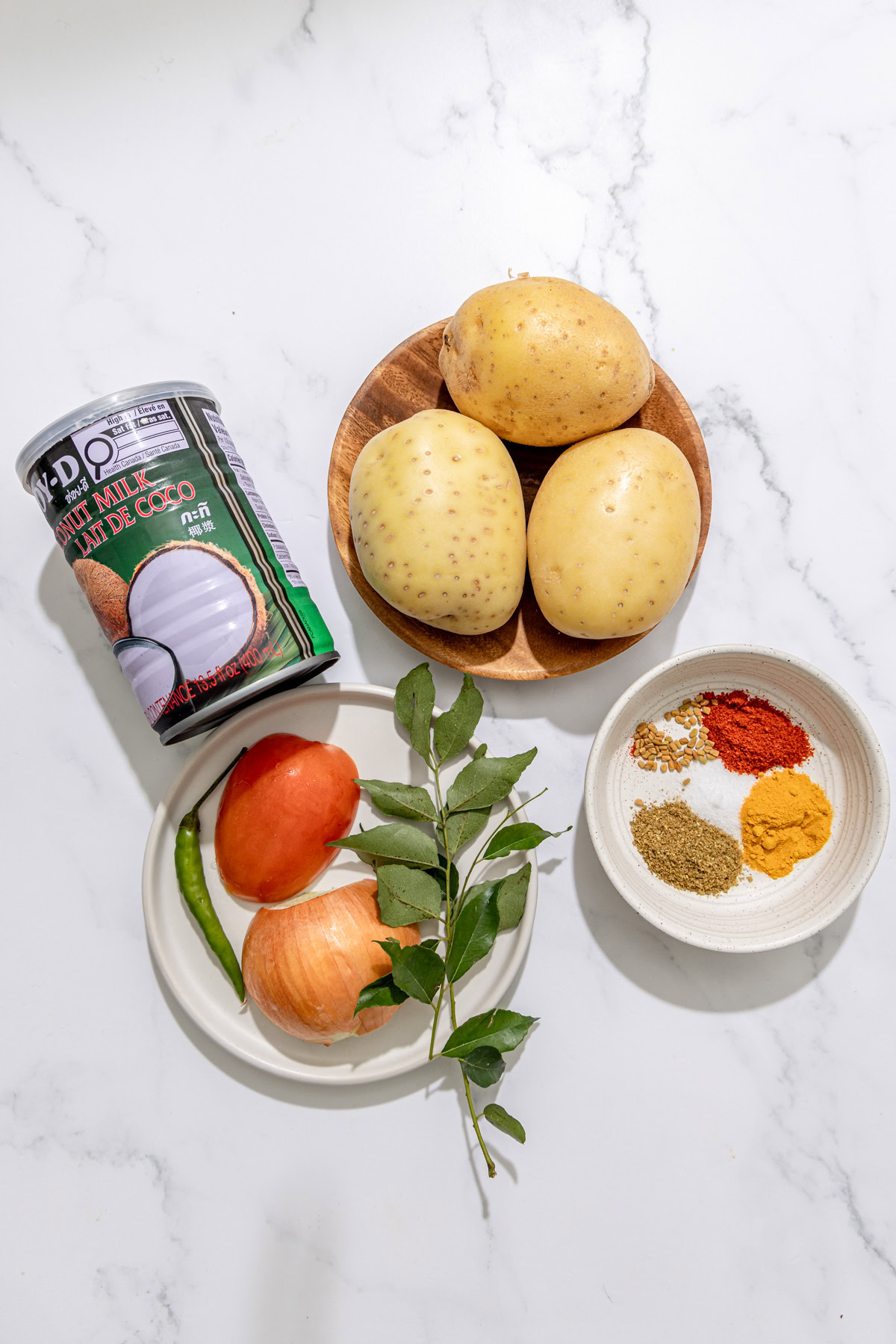
- Potatoes – Medium-sized ones work best. Peel and cut into quarters so they cook evenly. White or yellow potatoes work best.
- Onion – Sliced thin. Adds sweetness and body to the base.
- Curry leaves – A whole sprig. These are non-negotiable in Sri Lankan cooking. Dried ones work in a pinch but fresh is so much better.
- Rampe (pandan leaf) – Just one piece. Gives that signature warm, slightly floral note you can’t quite put your finger on.
- Fenugreek seeds – Just a little. They add a subtle bitterness that balances out the coconut milk beautifully.
- Garlic – Sliced, not crushed. You want it to melt into the curry gently.
- Tomato – Half a small roma tomato. Some people leave this out entirely, and that’s fine too. I use just a little bit for a hint of brightness – not enough to make it sour, just enough to round out the flavour.
- Raw curry powder – This is the mild, unroasted kind. Gives a hint of spice. It’s easy to make it at home. Use cumin and coriander powder instead.
- Chilli powder – Adjust based on who’s eating. Cut it right back for kids, or add more if you like heat.
- Turmeric – Gives that gorgeous golden colour and a mild earthiness.
- Canned coconut milk – This does double duty. Diluted with hot water for the thin coconut milk to cook the potatoes, and used as-is (thick) to finish the curry. One can covers you for both.
How to Make Sri Lankan Potato Curry
*Scroll below for the printable recipe card and ingredient measurements.
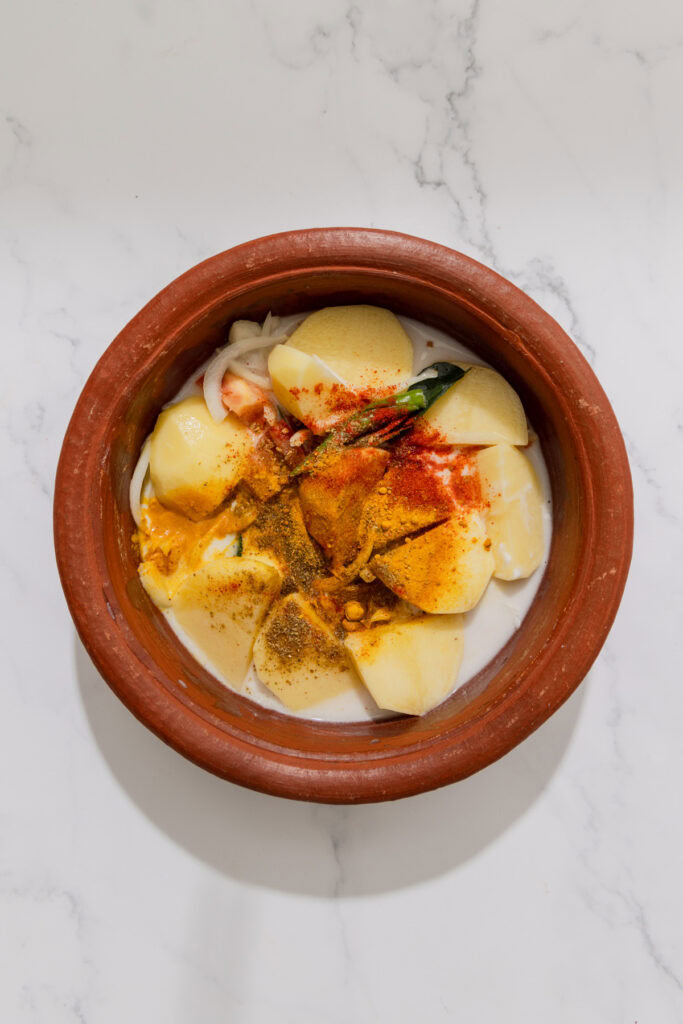
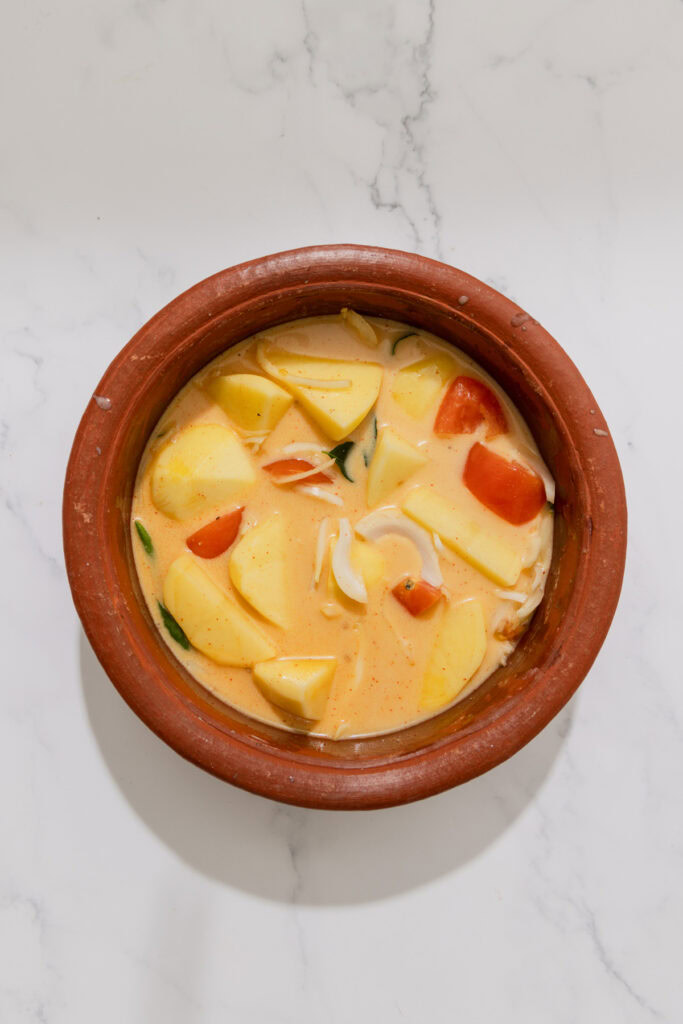
- Step 1: Peel your potatoes and cut them into quarters. Try to keep the pieces roughly the same size so they cook evenly.
- Step 2: Add the potatoes, sliced onion, curry leaves, rampe, fenugreek seeds, sliced garlic, chopped tomato, raw curry powder, chilli powder, turmeric, and salt into your pot. Give it a quick mix to coat everything in the spices.
- Step 3: Add 1/4 cup of your canned coconut milk to 1 cup of hot water. Stir to combine. This is your thin coconut milk.
- Step 4: Pour the thin coconut milk into the pot with your potato mixture. Place it on the stove and bring it to a gentle boil – not a rolling boil, just until you start to see the edges bubbling. Cover with a lid and cook on medium heat for 12 to 15 minutes, or until the potatoes are fork-tender. Check at the 12-minute mark.
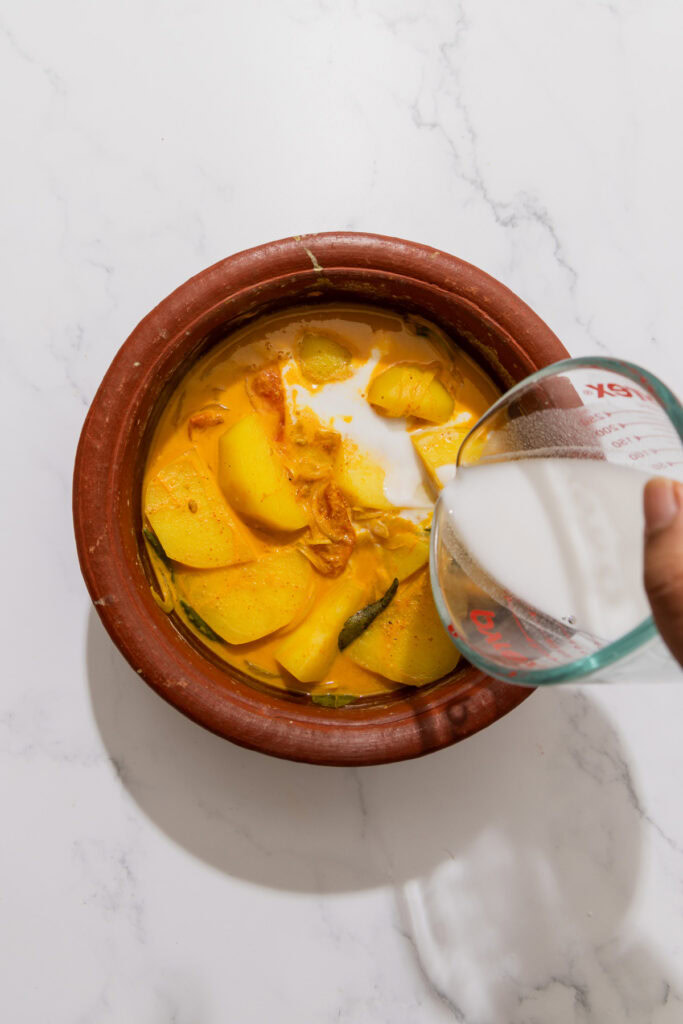
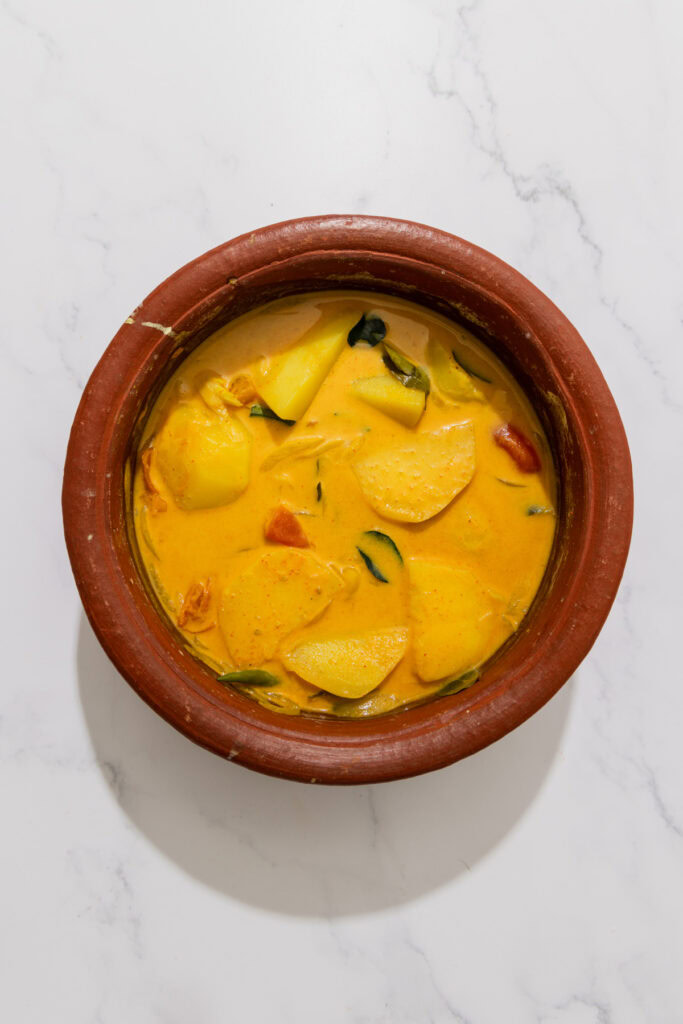
- Step 5: Once the potatoes are cooked through, add your thick coconut milk (about 3 tablespoons of coconut milk mixed with a small splash of hot water). Stir gently and let it cook for another minute or two on low heat. You don’t want to boil it hard at this stage or the coconut milk can split.
- Step 6: Remove from heat and serve warm. That’s it!
Recipe Tips
- Add tempering for special occasions. Heat a little oil in a small pan, add sliced onion, dried red chilli, curry leaves, and a few mustard seeds. Let them sizzle until fragrant and golden, then pour the whole thing over the finished curry. It adds so much depth and makes it feel a little more dressed up.
- Don’t stir too much while cooking. Potatoes can break apart if you’re constantly stirring. Let them do their thing with the lid on.
Serving Suggestions
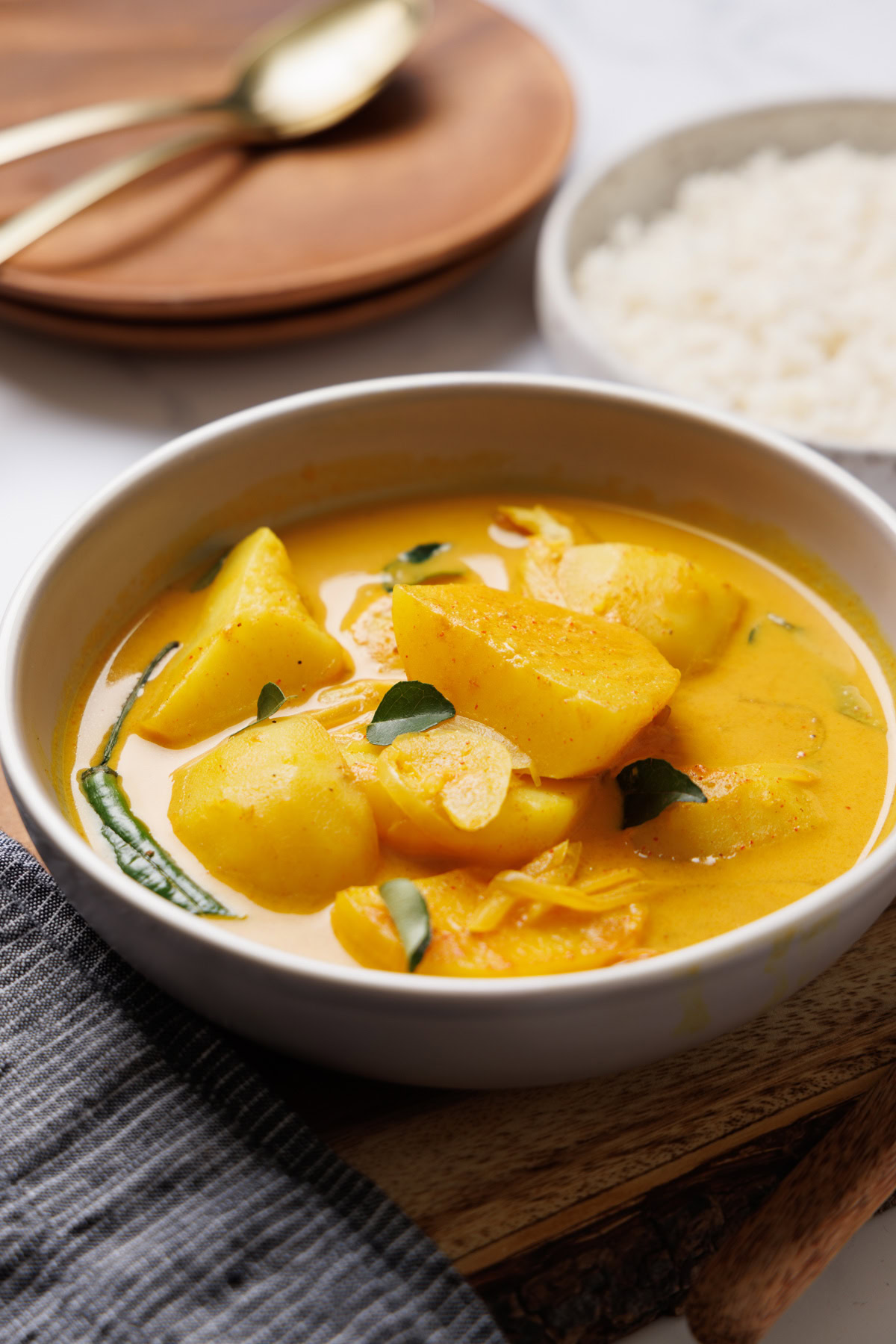
This curry is made for a rice and curry spread. Serve it with steamed white rice, or idiyappa (string hoppers). Honestly, it’s good scooped up with a slice of crusty bread or achchu paan too.
Round out your plate with a bowl of spicy curries like chicken curry, beef curry or fish curry. And the rice and curry bowl won’t be complete with vegetable curries like beetroot, green bean or pumpkin curry and a generous spoonful of pol sambol on the side. That’s a proper Sri Lankan meal right there.
FAQs
Can I use fresh coconut milk?
Yes, absolutely! If you have access to freshly pressed coconut milk, use it. Just follow the same thin and thick split – dilute some for cooking, keep the rest thick for finishing.
Can I add any other vegetables?
This is a classic potato curry so I usually keep it simple, but you could add a handful of green beans or a small carrot cut into chunks if you like. Just make sure everything is cut to a similar size so it all cooks at the same time.
DID YOU MAKE IT? Please leave a comment and rating letting us know how you liked this recipe! Tag us on Instagram or Facebook.
Recipe
Sri Lankan Potato Curry (Ala Curry)
Ingredients
- 3 potatoes medium
- 1 onion thinly sliced
- 1 sprig curry leaves
- 1 piece rampe (pandan leaf)
- ½ roma tomato chopped
- ¼ tsp fenugreek seeds
- 1 garlic clove sliced
- 1 tsp raw curry powder
- ½ tsp chilli powder
- ½ tsp turmeric
- ½ tsp salt
For thin coconut milk:
- ¼ cup canned coconut milk + 1 cup hot water
For thick coconut milk:
- 3 tbsp canned coconut milk + small splash of hot water
Instructions
- Peel and quarter the potatoes into even pieces.
- Add potatoes, onion, curry leaves, rampe, fenugreek seeds, garlic, tomato, curry powder, chilli powder, turmeric, and salt to a pot. Mix to combine.
- Mix ¼ cup coconut milk with 1 cup hot water to make thin coconut milk. Add to the pot.
- Bring to a gentle boil (edges bubbling, not a rolling boil). Cover and cook on medium heat for 12 to 15 minutes until potatoes are fork-tender. Check at 12 minute mark.
- Add the thick coconut milk to the pot and stir gently. Cook for 1 to 2 minutes on low heat.
- Remove from heat and serve warm.
Notes
- Tomato is optional – use just a small amount to avoid making the curry sour.
- Tempering is optional for everyday cooking but highly recommended for special occasions. Fry sliced onion, dried chilli, curry leaves, and mustard seeds in oil and pour over the finished curry.
- Do not boil vigorously after adding thick coconut milk – it can cause the coconut milk to split.
- Fresh or frozen curry leaves and rampe can be substituted if fresh is not available.
- Storage: Store in an airtight container in the fridge for up to 3 days. Reheat in the microwave or gently on the stove with a small splash of water or coconut milk. This curry tastes even better on day two.